
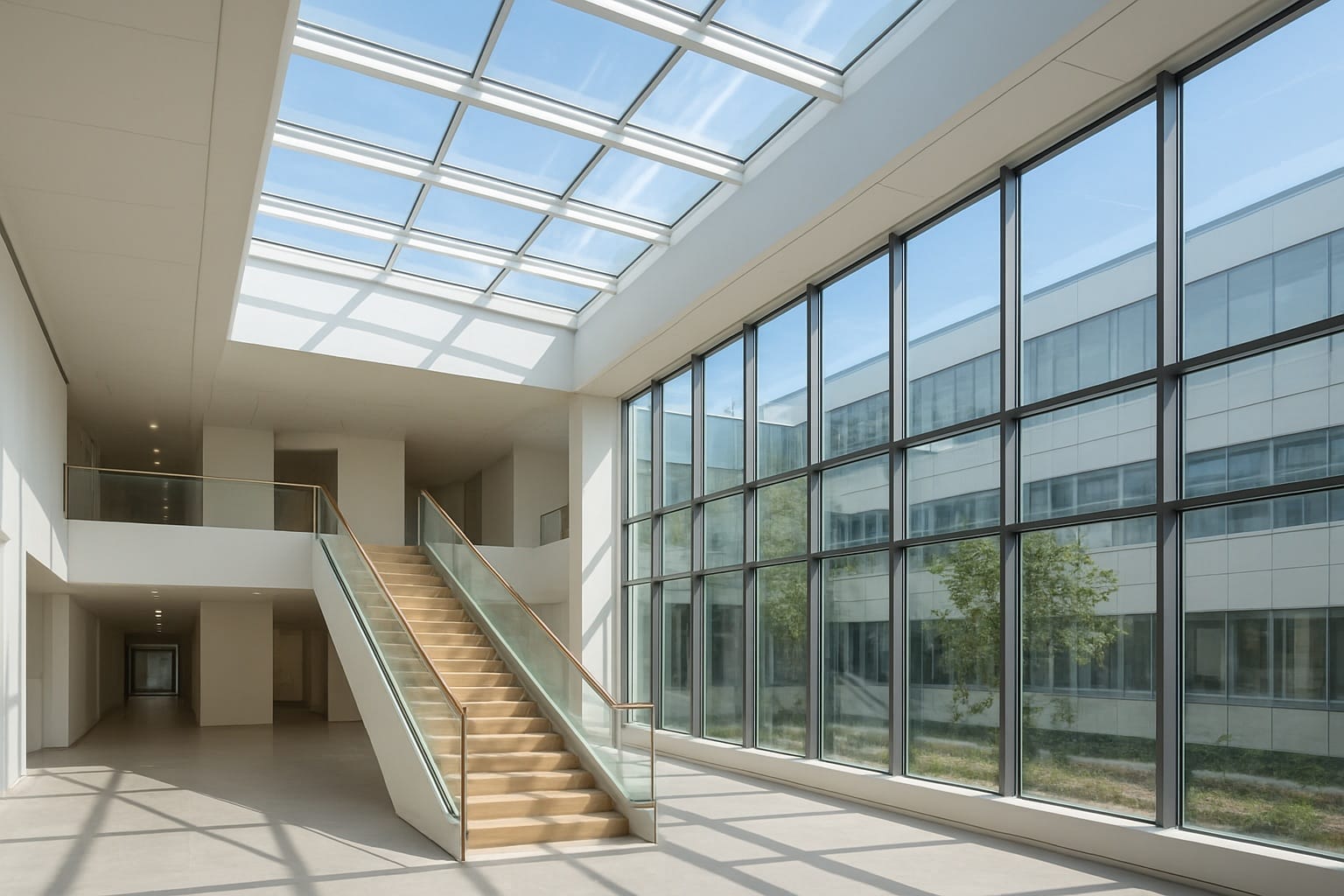
Natural lighting—or daylighting—is the intentional use of sunlight to illuminate building interiors. Crucial to modern architectural, structural, and civil engineering design, it enhances aesthetics, occupant comfort, and sustainability. By integrating strategic window placement, skylights, reflective surfaces, and shading systems, buildings can leverage daylight to reduce energy use, support health, and elevate spatial quality. This article delves into the technical benefits, implementation methods, and design considerations to help WeStruct engineering clients design light-filled, efficient, and human-centered environments.
1. Why Natural Lighting Matters
Energy Savings & Sustainability
Daylighting can slash artificial lighting energy use by up to 40%–60%. Advanced daylight harvesting systems—which dim or disable artificial lighting as natural light increases—regularly deliver 20%–60% savings depending on climate and usage.
Health & Well-Being
Exposure to natural light boosts productivity, mood, and circadian rhythm alignment—enhancing sleep and cognitive function. It also increases vitamin D synthesis and suppresses issues like mold growth.
Aesthetics & Biophilic Design
Natural light enriches spatial perception, rendering colours more vibrant, textures richer, and spaces more inviting. It encourages occupants’ connection to nature, aligning with biophilic design principles that enhance well-being.
2. Key Techniques for Implementing Natural Lighting
Daylighting & Daylight Factor
Daylighting uses windows, skylights, and reflective surfaces to maximize daylight. The daylight factor (DF) quantitatively measures interior vs exterior light; higher values mean better natural illumination.
Skylights & Toplighting
Particularly effective in central or deep zones, skylights reduce dependence on sidelighting and can cut lighting energy by up to 80% . Balancing daylight and heat involves using Low-E glazing and automated shading.
Light Shelves, Clerestories & Atriums
Light shelves reflect daylight deeper into interiors, while clerestory windows and atriums bring light into central spaces and multi-story volumes.
Daylight Harvesting Controls
Automated lighting controls that respond to daylight levels can fine-tune energy use and comfort.
Material Selection & Reflective Surfaces
Using high-reflectance surfaces, mirrored finishes, and light-colored interiors increases natural light distribution.
Advanced Glazing & Smart Technologies
Low-E, high-performance glazing, electrochromic glass, and daylight sensors help regulate light while managing heat gain and glare.
3. Design Considerations & Challenges
– Glare & Thermal Control
Too much daylight can cause glare or overheating. Intelligent design, shading, and dynamic glazing can optimize comfort.
– Spatial Planning & Building Orientation
Building orientation determines sunlight exposure. South-facing windows maximize daylight in northern hemispheres; reflective partitions ensure light reaches interior zones.
– Regulatory Guidelines
Standards like CIBSE Lighting Guide 10 (UK), ASHRAE 90.1 (USA), and IBC address daylight requirements along with well-being certifications like LEED and WELL.
– Quantitative Methods
Tools like Radiance, Radiance-based simulations, and daylight factor grids help design and predict interior daylight performance.
4. Real-World Impact: Case Insights
Daylit classrooms correlate with improved student performance, less absenteeism, and enhanced concentration .
“Study after study has strongly indicated that students perform better in classrooms with a good balance of natural light.”
In healthcare settings, natural lighting supports faster patient recovery and reduces stress and medication use .
Summary
Natural lighting is a transformative design tool—boosting energy efficiency, health, aesthetics, and property value. By employing skylights, clerestories, light shelves, daylight harvesting systems, and thoughtful material choices, WeStruct’s civil and architectural projects can harness daylight to create compelling, sustainable, and comfortable environments. Balancing sunlight control with design tools like simulations and smart glazing ensures both effectiveness and occupant well-being.