
The Importance of Professional Column Design
Column design is the backbone of any safe structure. Whether you are constructing a multi-storey office block, a bespoke residential home, or a commercial shisha lounge, columns are the silent heroes holding everything up. They transfer the weight of the building—the roof, floors, and furniture—safely down to the foundation.
At WeStruct, we believe that understanding the basics of column design helps our clients make informed decisions. While the mathematics can be complex, the goal is simple: structural integrity and peace of mind.
In this guide, we break down exactly what goes into designing a robust column and why skipping professional engineering is never an option.
What is a Structural Column?
Before diving into the technical column design details, it helps to visualise what a column actually does. In engineering terms, a column is a vertical structural member designed primarily to support compressive loads.
Think of it like the legs of a table. If the legs are too thin, they might snap. If they are too long and skinny, they might bend. A building column works on the same principle but carries tonnes of concrete, steel, and live weight (people and equipment).
5 Essential Factors in Column Design
To ensure a building stands the test of time, engineers must calculate several critical factors. Here are the 5 secrets to perfect column design.
1. Understanding the Loads (Axial and Moment)
A column doesn’t just hold weight straight down. It faces different types of forces:
Axial Loads: The vertical weight pushing directly down.
Moments (Bending): Forces that try to bend the column, often caused by wind hitting the building or unbalanced loads on the floors above.
A successful column design must account for both. If a column is designed only for vertical weight but gets hit by a strong wind load, it could fail catastrophically.
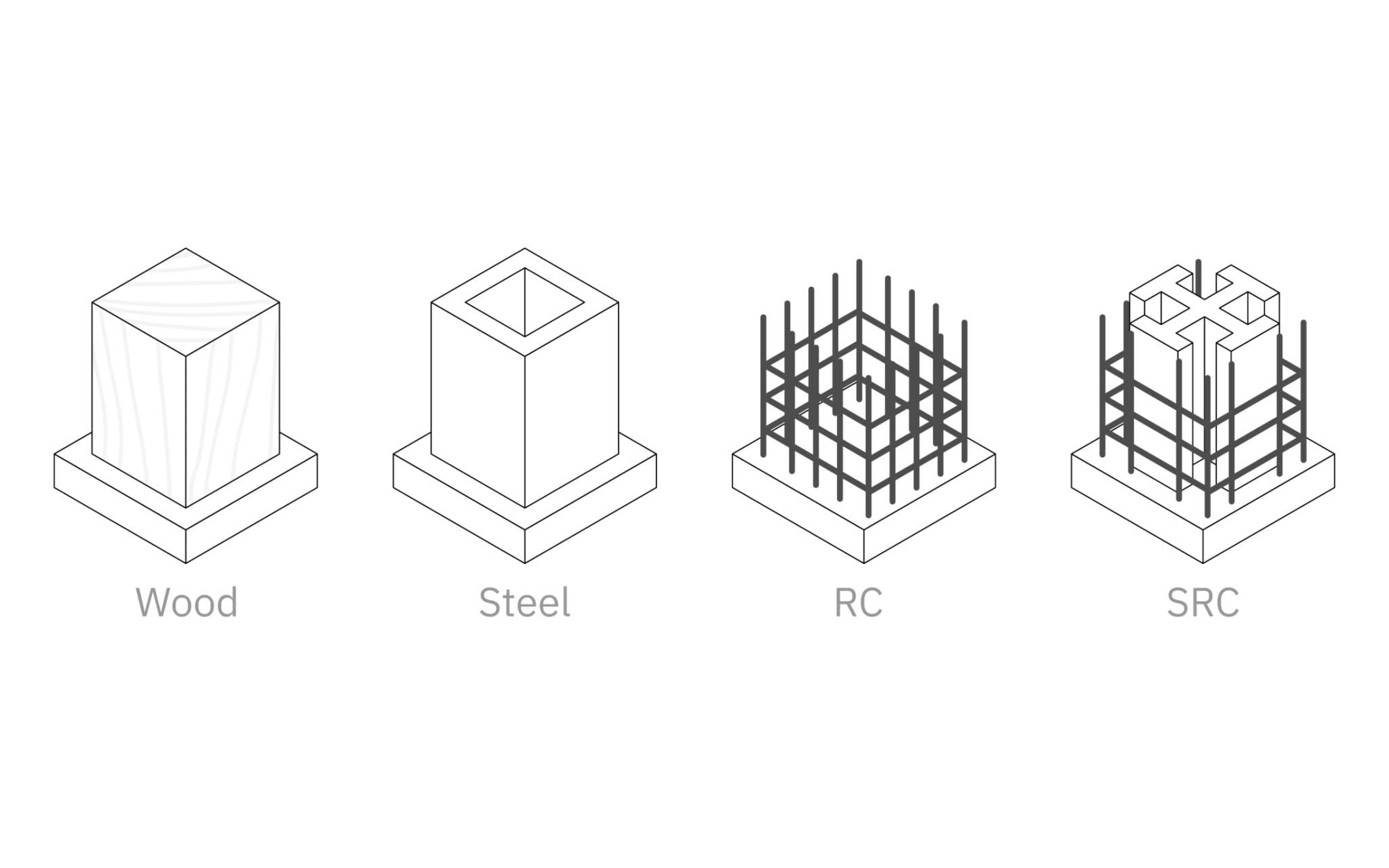
2. Material Selection: Concrete vs. Steel
The material dictates the design.
Reinforced Concrete: The most common choice for many structures. It offers excellent fire resistance and compressive strength. The “design” involves calculating the exact amount and placement of steel reinforcement bars (rebar) inside the concrete.
Structural Steel: Used for faster construction and lighter structures. Steel columns are incredibly strong but must be protected against fire and corrosion.
Our team at WeStruct selects the material that best fits your project’s budget and architectural vision.
3. Combating “Buckling” and Slenderness
Have you ever tried to push down on a long plastic ruler? Instead of crushing, it bows out to the side. This is called buckling.
In column design, the “slenderness ratio” is crucial. A short, thick column is hard to crush. A tall, thin column is easy to buckle. Engineers must calculate the effective length of the column and ensure it is stiff enough to resist bowing under pressure.
4. Connection Details
A column is only as strong as its connections. The points where the column meets the beams (top) and the foundation (bottom) are critical stress points.
Pinned connections allow for some rotation.
Fixed connections are rigid and transfer bending forces.
Proper detailing ensures that forces flow smoothly from one element to the next without creating weak spots.
5. Safety Factors and Compliance
We never design a column to hold exactly the weight of the building. We design it to hold much more. This is called the Factor of Safety.
In the UK, we follow strict Eurocodes and British Standards. These regulations dictate the safety margins required for column design to account for unexpected overloads or material imperfections. You can read more about these standards on the Institution of Structural Engineers website.
Why You Need WeStruct for Your Column Design
It might be tempting to use “rule of thumb” measurements for a renovation, but the risks are high. A failing column doesn’t always collapse immediately; it can develop dangerous cracks or settle unevenly over the years.
We use advanced structural analysis software to model your building in 3D. This allows us to:
Optimise the column design to save materials (and money).
Ensure perfect coordination with architects so columns don’t obstruct the room layout.
Provide clear calculations for Building Control approval.
Whether you need a sleek steel column for a modern look or a heavy-duty concrete pier for a basement, we handle the complex engineering so you can focus on the build.
Learn More About Our Engineering
We cover a wide range of structural services. From complex Sui Generis projects to standard residential extensions, our approach remains the same: safety, efficiency, and clarity.
Conclusion
Great column design is invisible. When done right, you never notice it—you simply enjoy a safe, stable, and beautiful building. When done wrong, it becomes the only thing you worry about.
Don’t leave your structural safety to chance. Ensure your project is built on a solid foundation with professional engineering.
Ready to start your project? Contact Westruct today for expert structural advice and design.