
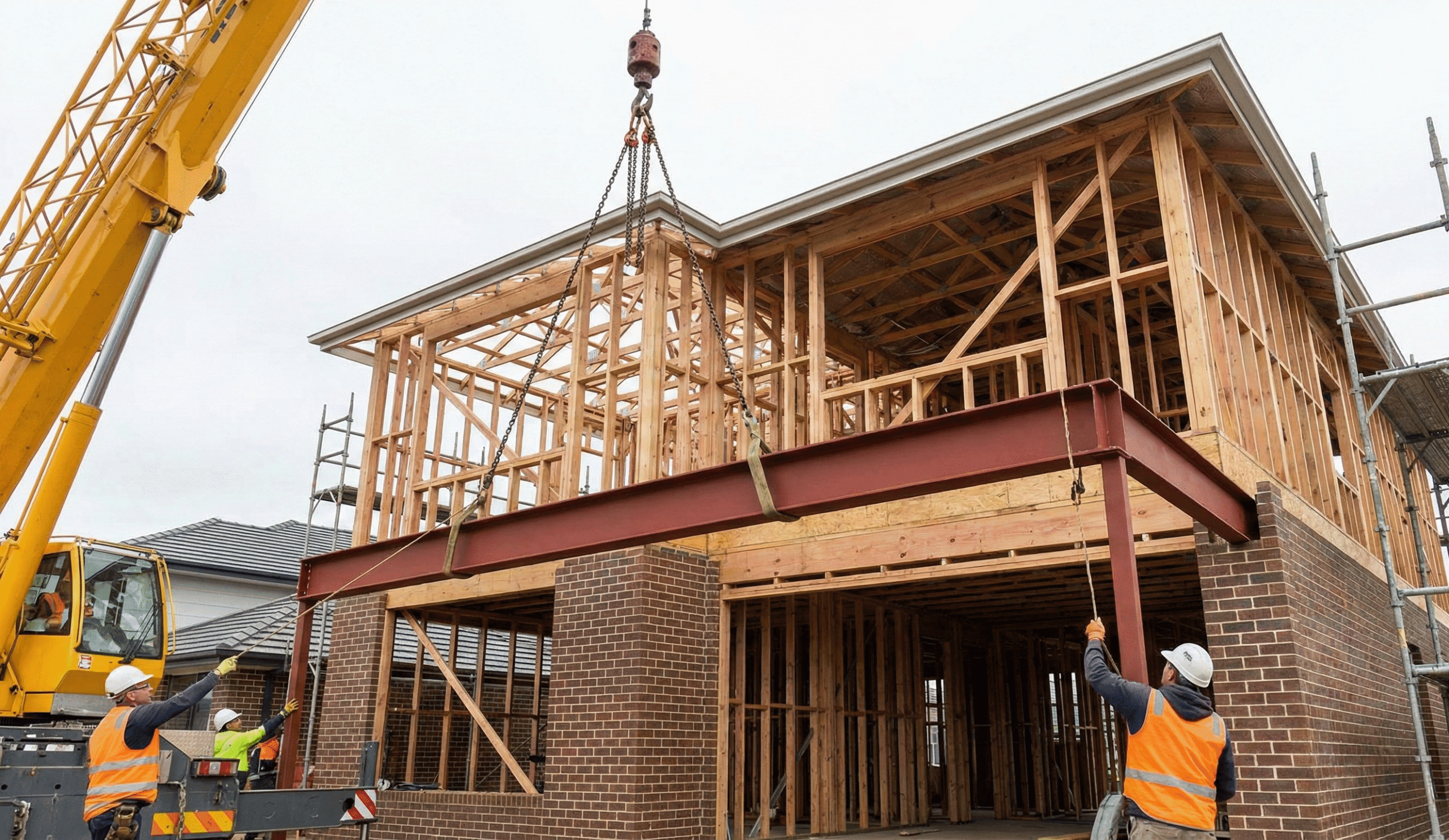
The Foundation of Open Spaces: Professional Beam Design
Beam design is fundamental to creating open, usable spaces in any building. While columns hold things up vertically, beams span horizontally, bridging gaps between walls or columns to support floors, roofs, and ceilings. They are the reason you can have a large, open-plan living area without a forest of posts getting in the way.
At WeStruct, we know that a well-designed beam is about more than just picking a piece of steel from a catalogue. It’s about calculating forces, managing “sag,” and ensuring the long-term stability of your property.
Whether you are removing a load-bearing wall for a kitchen extension or designing a complex commercial roof, professional beam design is essential for safety and compliance.
What Does a Beam Actually Do?
In simple terms, a beam’s job is to resist bending. When you place weight on top of a beam (like furniture and people on a floor), the beam wants to bow downwards.
The top fibres of the beam are squashed (compression), and the bottom fibres are stretched (tension). A successful beam design must handle both of these internal forces simultaneously without breaking or bending too much.
5 Critical Factors in Beam Design
Engineers must juggle several variables to find the perfect beam for a specific job. Here are the 5 critical factors we consider in every beam design.
1. Accurate Load Calculation (Dead vs. Live)
The first step is knowing exactly what the beam needs to support.
Dead Loads: The permanent weight of the structure itself—the timber floor joists, floorboards, ceiling plasterboard, and any fixed partition walls sitting on it.
Live Loads: The temporary weight that moves around—people, furniture, and stored items.
A common mistake in amateur design is underestimating these loads. At WeStruct, we calculate these precisely according to building standards to ensure no surprises.
2. Controlling Deflection (The “Sag” Factor)
A beam might be strong enough not to break, but if it sags noticeably in the middle, it’s a failed design. This sagging is called deflection.
Excessive deflection can cause:
Cracks in the ceiling plaster below.
Doors on the floor above to stick.
A bouncy, uncomfortable feeling when walking across the floor.
Building regulations set strict limits on acceptable deflection. Our beam design process ensures your floors remain level and rigid.
3. The Span-to-Depth Ratio
There is a golden rule in beam design: the deeper the beam, the stiffer it is.
Spanning a wide gap with a shallow beam is very difficult and expensive. Often, increasing the depth of a steel beam by just a few centimetres can significantly increase its strength and reduce deflection. We work with architects to find the balance between structural need and maintaining maximum ceiling height.
4. Material Selection: Steel, Concrete, or Timber?
The choice of material depends on the span and the load.
Steel Beams (RSJs): The go-to for long spans and heavy loads in residential renovations, like removing a supporting wall. They are incredibly strong for their size.
Reinforced Concrete: Often used in new-build commercial projects, designed in conjunction with columns and floor slabs.
Timber/Glulam: Excellent for shorter spans or where an exposed, aesthetic wood finish is desired.
You can see how these materials interact in our guide to column design, as beams and columns must work together.
5. Shear Forces and Connection Details
While bending is the primary concern, beams can also fail near their supports due to “shear”—a slicing force that resembles scissors cutting paper. The beam design must ensure the web (the middle vertical part) of the beam is thick enough to resist this.
Furthermore, how the beam connects to a wall or column is crucial. A beam sitting on a crumbling brick pad is a safety hazard. We design proper padstones and connection plates to spread the load safely.
Why Rely on WeStruct for Your Beam Design?
Guesswork is not an option when structural stability is at stake. Relying on online calculators or “rule of thumb” sizing can lead to dangerous under-design or expensive over-design.
By engaging WeStruct, you get:
Safety & Compliance: Calculations that satisfy Building Control inspectors.
Cost Efficiency: We size the beam correctly—not too big, not too small—saving you money on materials.
Practical Solutions: We consider how the beam will be lifted and installed on-site.
For more technical information on steel used in construction, resources like The Steel Construction Institute offer valuable insights.
Conclusion
A successful build relies on the unseen engineering that makes it safe. Professional beam design is the key to creating the open, modern spaces that clients love, without compromising structural integrity.
Don’t take risks with your property. Ensure your renovations are built on solid engineering principles.
Planning a project that requires structural beams? Contact WeStruct today for expert advice and precise design calculations.