
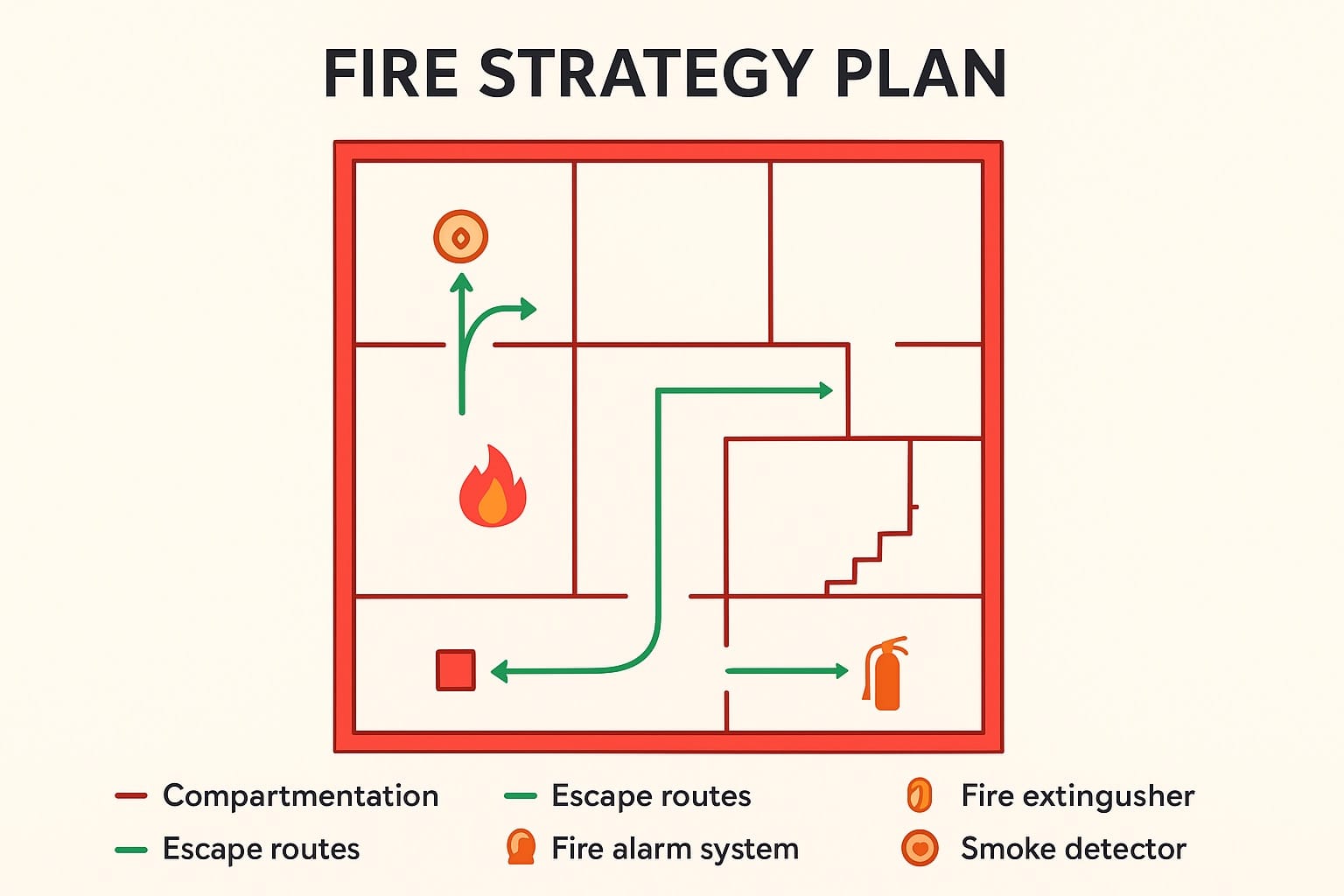
A Fire Risk Assessment (FRA) is a legal requirement in the UK and plays a key role in ensuring safety. Under Building Regulation Part B, buildings must meet fire safety standards for warning systems, escape routes, fire spread prevention, and emergency access. This guide explains how a compliant FRA supports Part B requirements and protects both people and property.
1. What Is Building Regulation Part B?
Scope: Applies to dwellings (Volume 1) and non-dwellings (Volume 2).
Covers Requirements B1–B5: warning systems, escape routes, fire spread, and access for fire services.
Guidance is flexible: Approved Document B suggests common methods, but alternatives may be used if they meet equivalent safety standards.
2. How to Carry Out a Fire Risk Assessment (Part B Focus)
Identify fire hazards (ignition sources, fuels).
Identify people at risk (occupants, vulnerable groups).
Review existing fire safety measures (alarms, detectors, doors).
Check escape routes (B1) for safety and compliance.
Assess fire spread (B2–B4) inside and outside the building.
Ensure fire service access (B5) is available.
Recommend improvements and document findings.
3. Why Compliance Matters
Legal duty under the Fire Safety Order.
Protects lives and property.
Demonstrates regulatory compliance and builds confidence.
A well-documented Fire Risk Assessment aligned with Building Regulation Part B ensures legal compliance and safeguards lives. By focusing on escape, prevention, and emergency access, you create safer buildings while meeting regulatory expectations.